

Prime Minister Olzhas Bektenov reviewed the work of the National Scientific Oncology Center (NSOC) and Nazarbayev University’s Biomedical Research Center, focusing on the implementation of the President’s instructions on advanced medical technologies and healthcare development.
Bektenov inspected the new NSOC building, where patients receive high-tech treatment. The center performs about 12,000 diagnostic and surgical procedures annually, 4,000 radiation and proton therapy courses, and up to 330 organ and bone marrow transplants. Oncology care is fully covered by state guarantees, with over 170 billion tenge allocated each year. Including infrastructure and equipment upgrades, oncology funding has increased sixfold in three years.
The Prime Minister was briefed on efforts to grant the NSOC the status of an “IAEA Anchor Center,” which would make it a regional hub for radiation oncology and nuclear medicine.
The Center for Radiation Technologies is developing a full production cycle of radiopharmaceuticals for diagnostics and cancer treatment. It already produces 18F-FDG for PET/CT and PET/MRI and plans to introduce 13 more radiopharmaceuticals. In-house production will support up to 12,000 studies per year. The radionuclide therapy unit treats thyroid cancer with iodine-131; over the past five months, 80 patients were treated, and the unit’s annual capacity exceeds 300.
The Ministry of Healthcare is creating a network of six regional radiopharmaceutical centers in Astana, Almaty, Shymkent, Semey, Karaganda, and Aktobe.
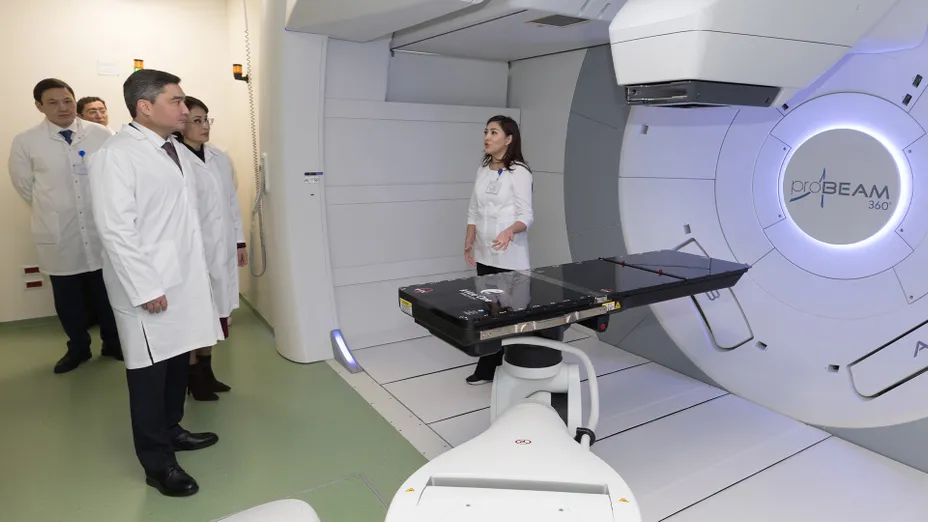
Bektenov reviewed the use of AI technologies in radiation and proton therapy. NSOC operates seven bunkers with Varian accelerators, including EDGE and ETHOS systems with AI features. The Proton Therapy Center — the only one in Central Asia — uses the ProBeam 360 system, with similar installations in just 24 countries. It can treat up to 1,000 patients annually, including foreign patients.
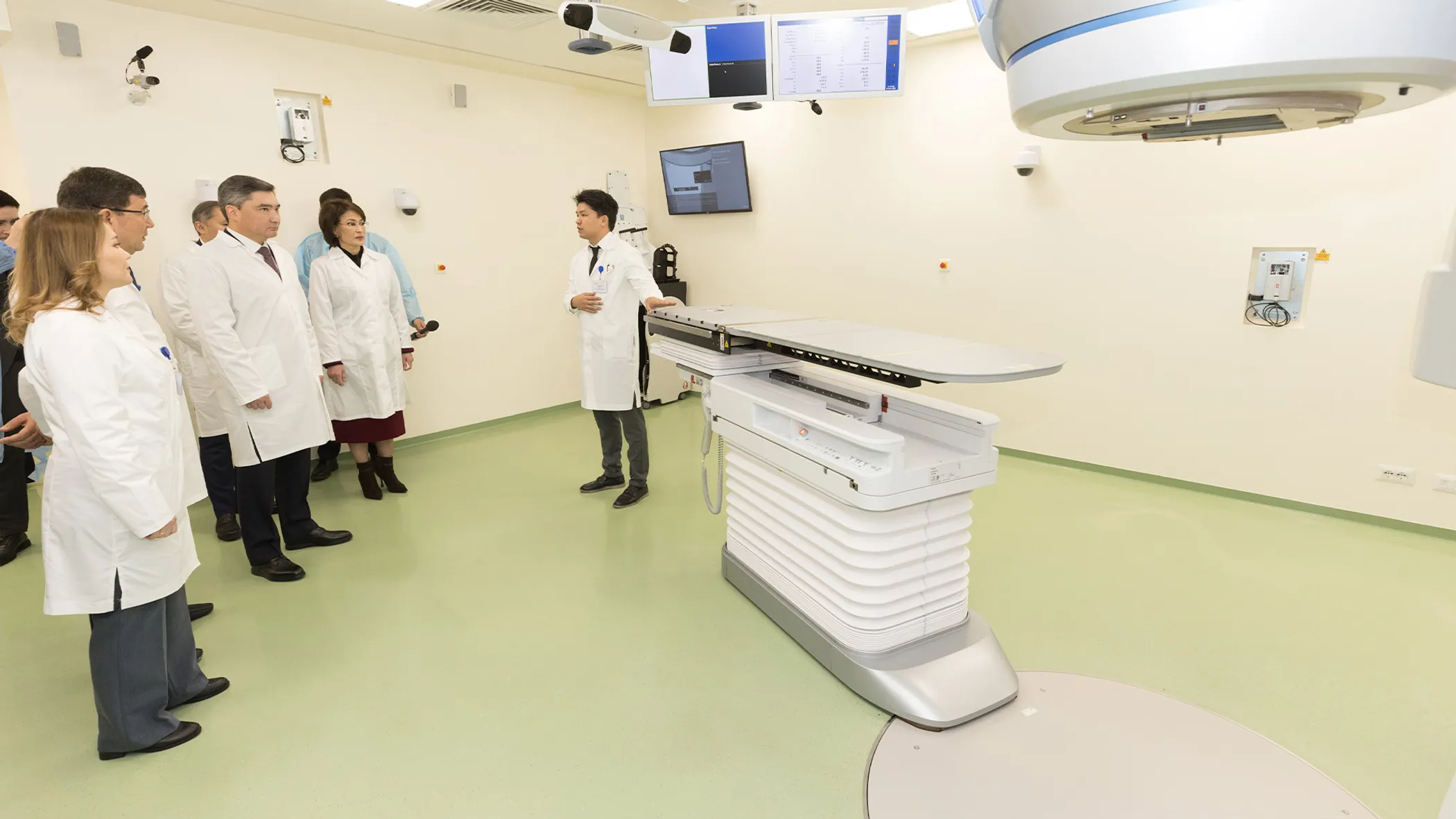
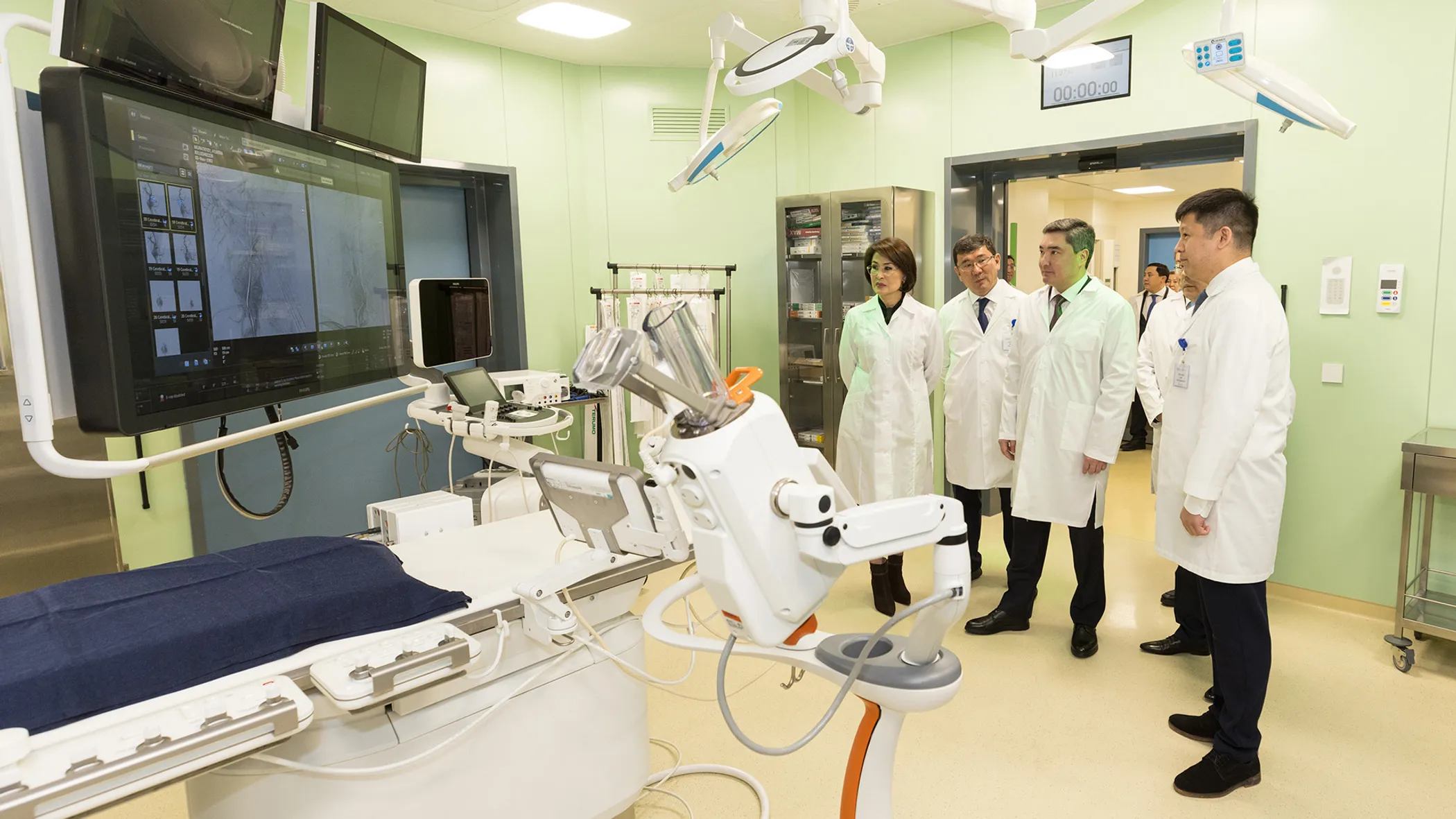
Hybrid operating rooms enable more than 350 high-tech surgeries a year. Over 250 NSOC specialists have been trained in leading oncology centers abroad. Bektenov instructed the Ministry of Healthcare to ensure equitable access to advanced treatment nationwide and support the development of nuclear medicine.
The Prime Minister also inspected the equipment of the new NU Biomedical Research Center — a 5,600 m² hub for biomedical and preclinical research, including genomics, molecular biology, tissue engineering, and regenerative medicine. Its key feature is a state-of-the-art vivarium that meets high biosafety standards and has no regional analogues. The center is undergoing accreditation with AAALAC International.
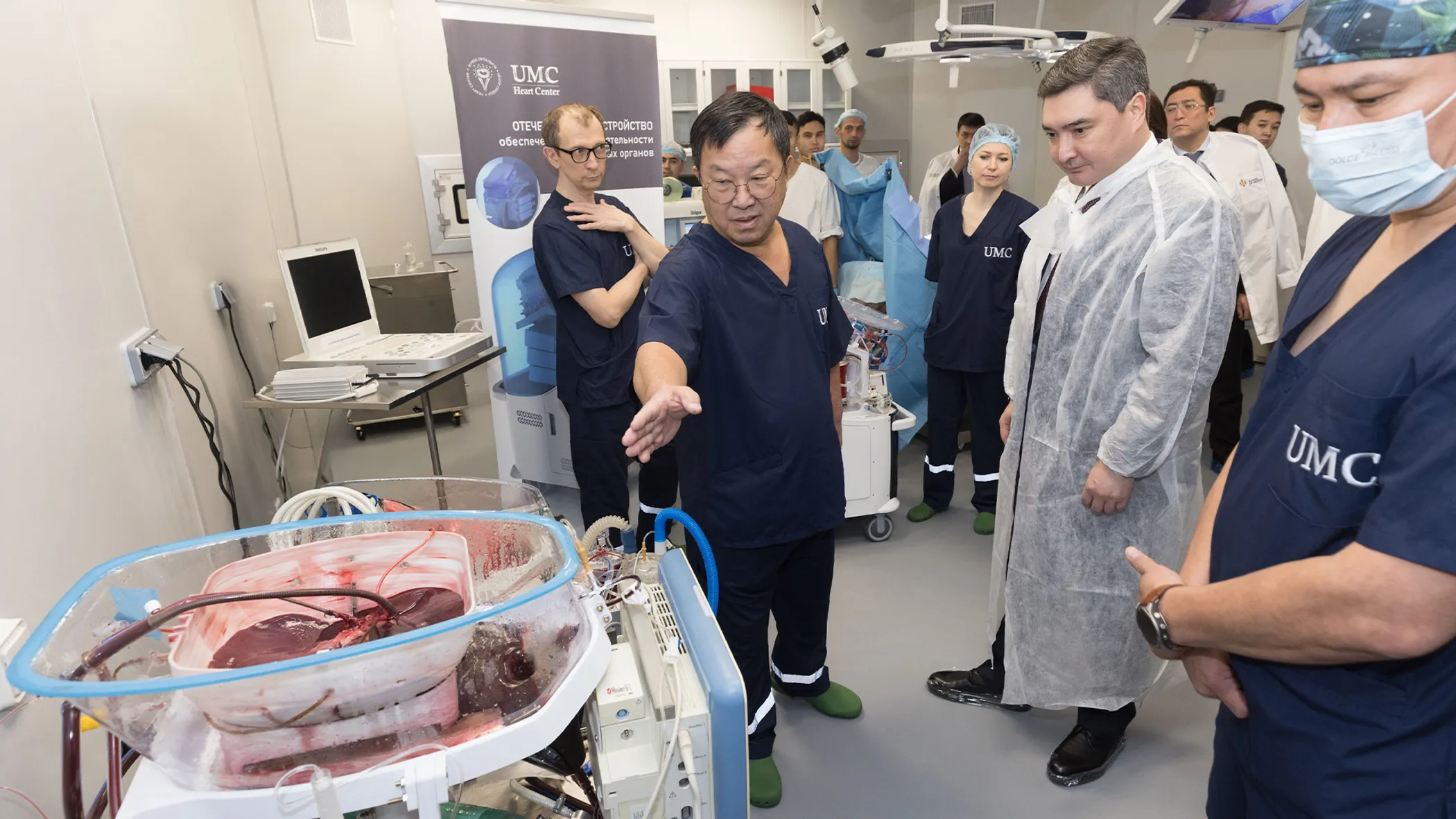
Bektenov was presented with scientific and technological projects developed within the NU ecosystem. Dr. Yuri Pya demonstrated the ALEM device for preserving and transporting donor organs in near-physiological conditions, which could significantly boost transplant outcomes. Professor Dos Sarbassov outlined plans for a Regional Pharmaceutical Center focused on preclinical trials and the development of new pharmaceutical products.
Bektenov also reviewed research at the NU School of Medicine and technopark projects in oncology, tissue regeneration, robotic fracture treatment, bioprocessing for pharmaceuticals, and other fields. He emphasized the importance of scientific research for the development of Kazakhstani medicine and pharmaceuticals and instructed ministries to support the practical implementation of domestic innovations.
Source: Primeminister.kz