

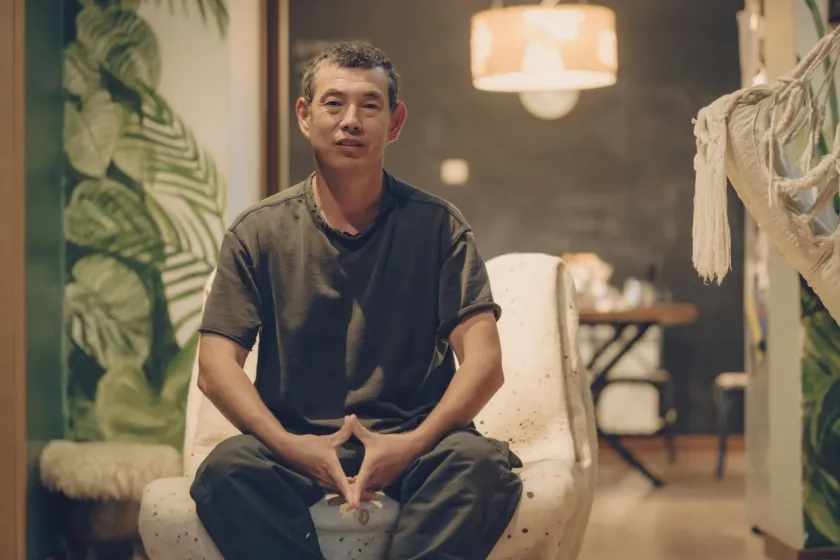
For Kazakh designer Daniyar Uderbekov, materials are not tools but living collaborators. “They can be broken, ‘tortured,’ exhausted. But they can also be ‘heard,’ their natural essence highlighted,” he says. Working with the material — not against it — defines his creative method.
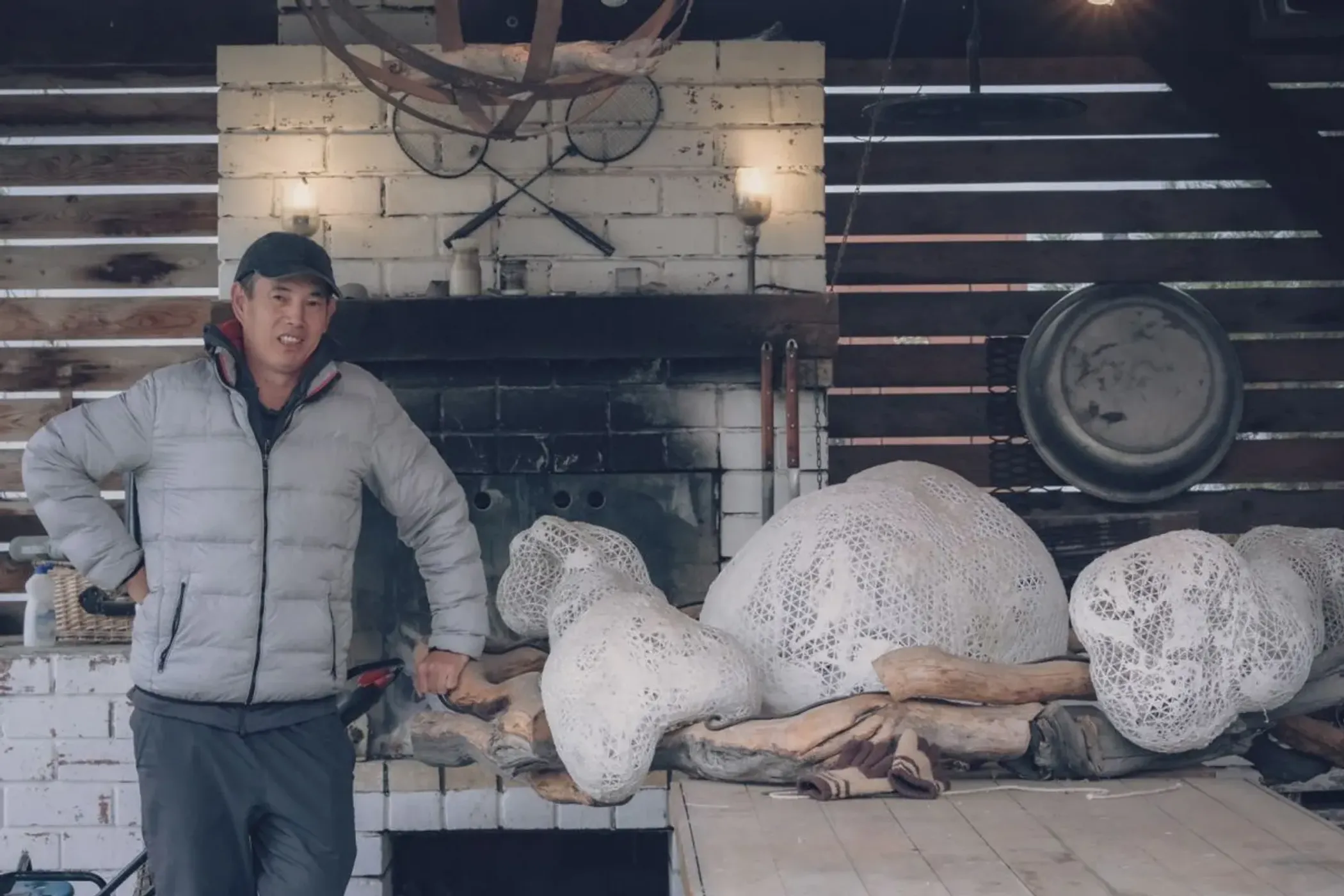
Leaving behind a career in advertising, Uderbekov founded a design lab where he experiments with stone, felt, and 3D printing. “At 40, I went back to study again. Many of the objects in my home I made before school — I knew that working with my hands drives me, but something was missing. After a year of studying, the puzzle came together — I understood where to go and how to express my identity.”
His philosophy is simple: “Don’t torture yourself, the material, or the resources.” Each object begins with nature’s logic. “The stone had to be heavy (over 100 kg), flat on one side and rounded on the other. Such boulders lie along riverbeds in Almaty. Instead of casting or shaping them, I search for what’s already created by nature — and give it function.”
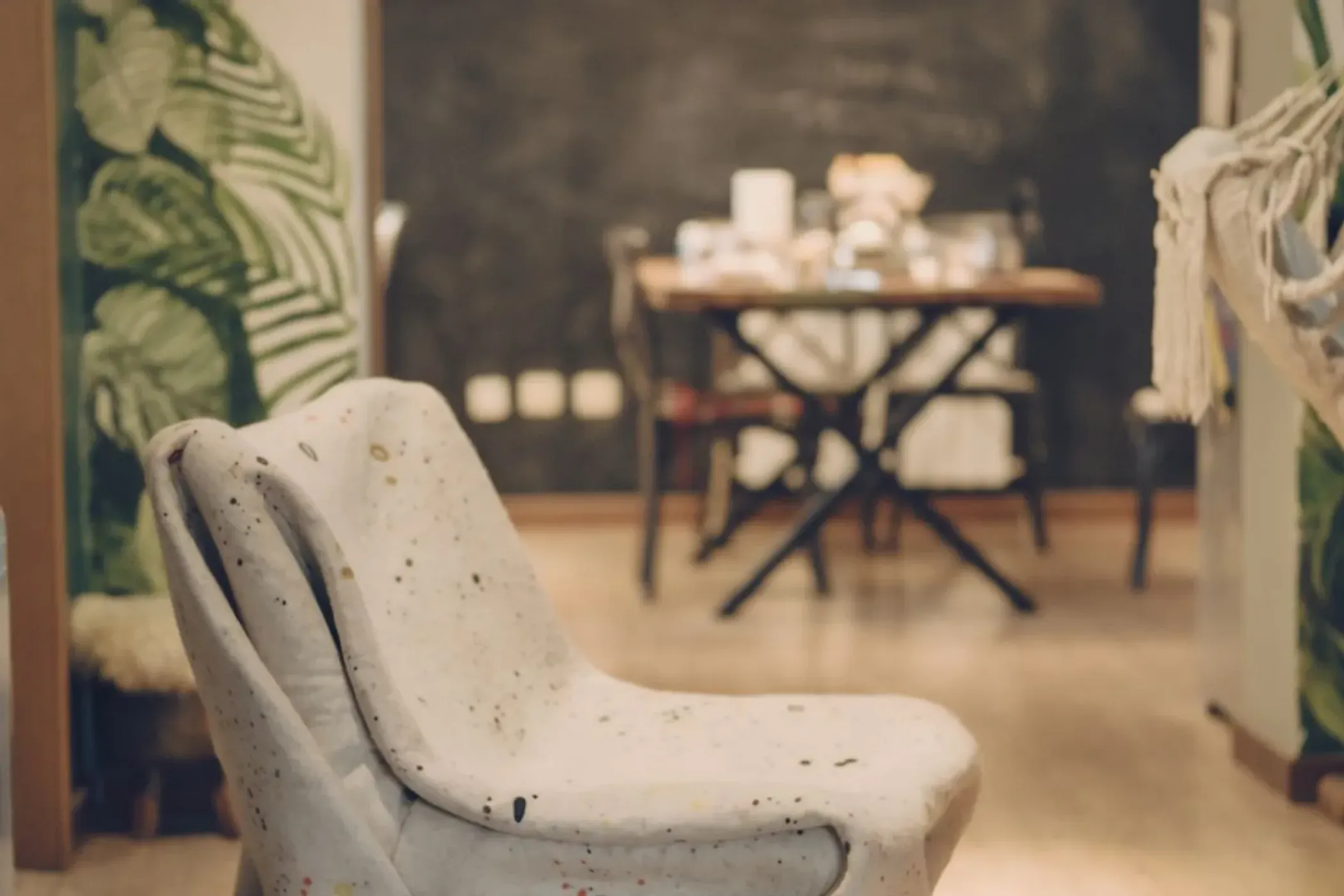
Uderbekov sees technology as an extension of craftsmanship. When there are no machines, there’s 3D printing; when there are no textiles, there’s self-supporting felt. His concept — “Neolithic + Technology” — envisions the future of production: “In 20–30 years, there will be fewer mega-factories, and manufacturing will spread across small workshops. Goods will be produced, consumed, and recycled locally.”
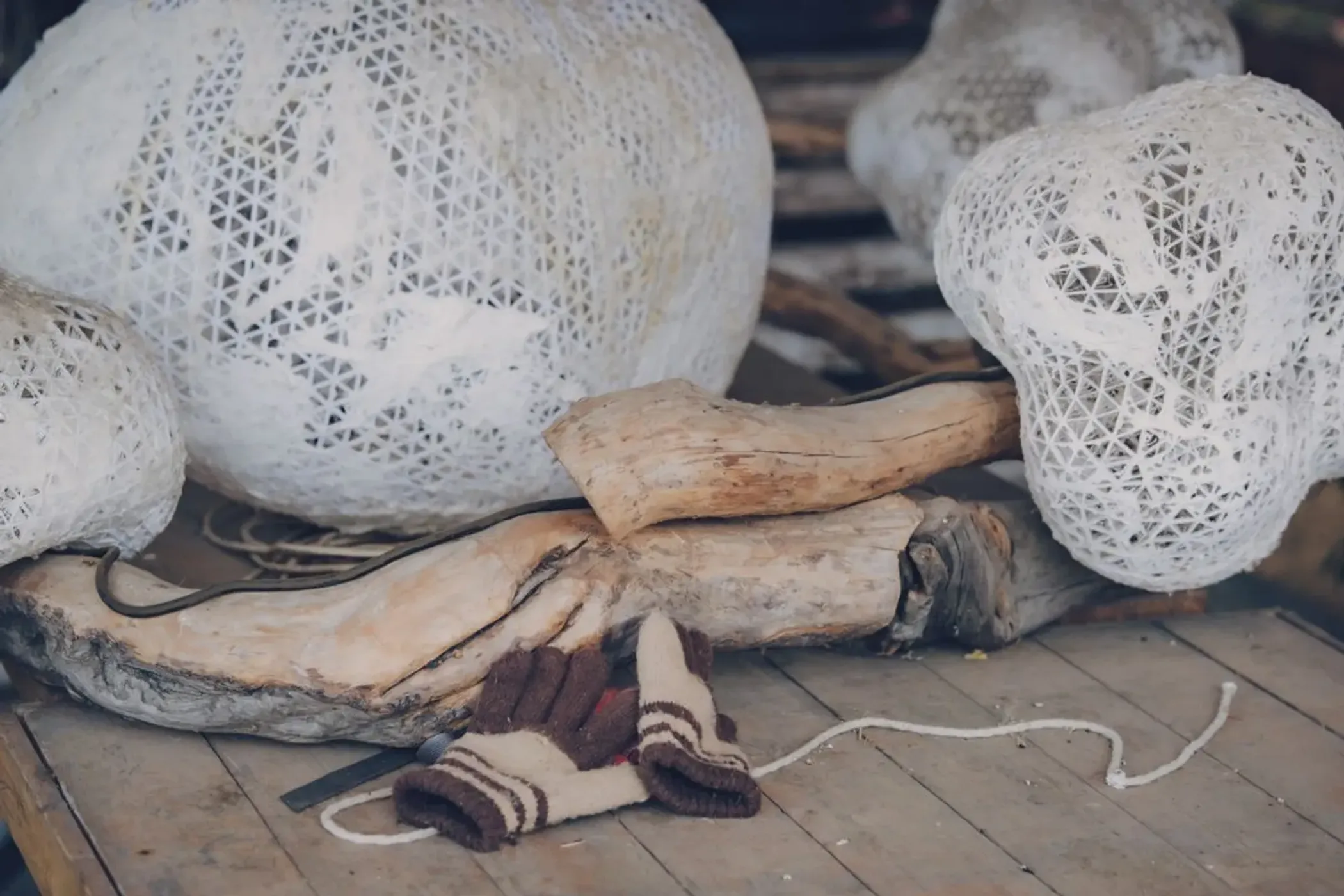
He avoids ethnic clichés in his work: “I deliberately refused to use ornamental speculation. Once, ornament was a language with deep meaning. Today, it’s mostly a surrogate.” Instead, he draws from ancient mastery: “That’s a phenomenal level of craftsmanship. These objects are from the future. I ‘lift’ the language from there — not from ready-made clichés.”
Sustainability, for Uderbekov, is both ecological and philosophical. “My pieces are biodegradable: you bury them — and they disappear in a few years, though they can serve for decades. I want to be a successor of the nomadic culture — ‘leave no trace.’”
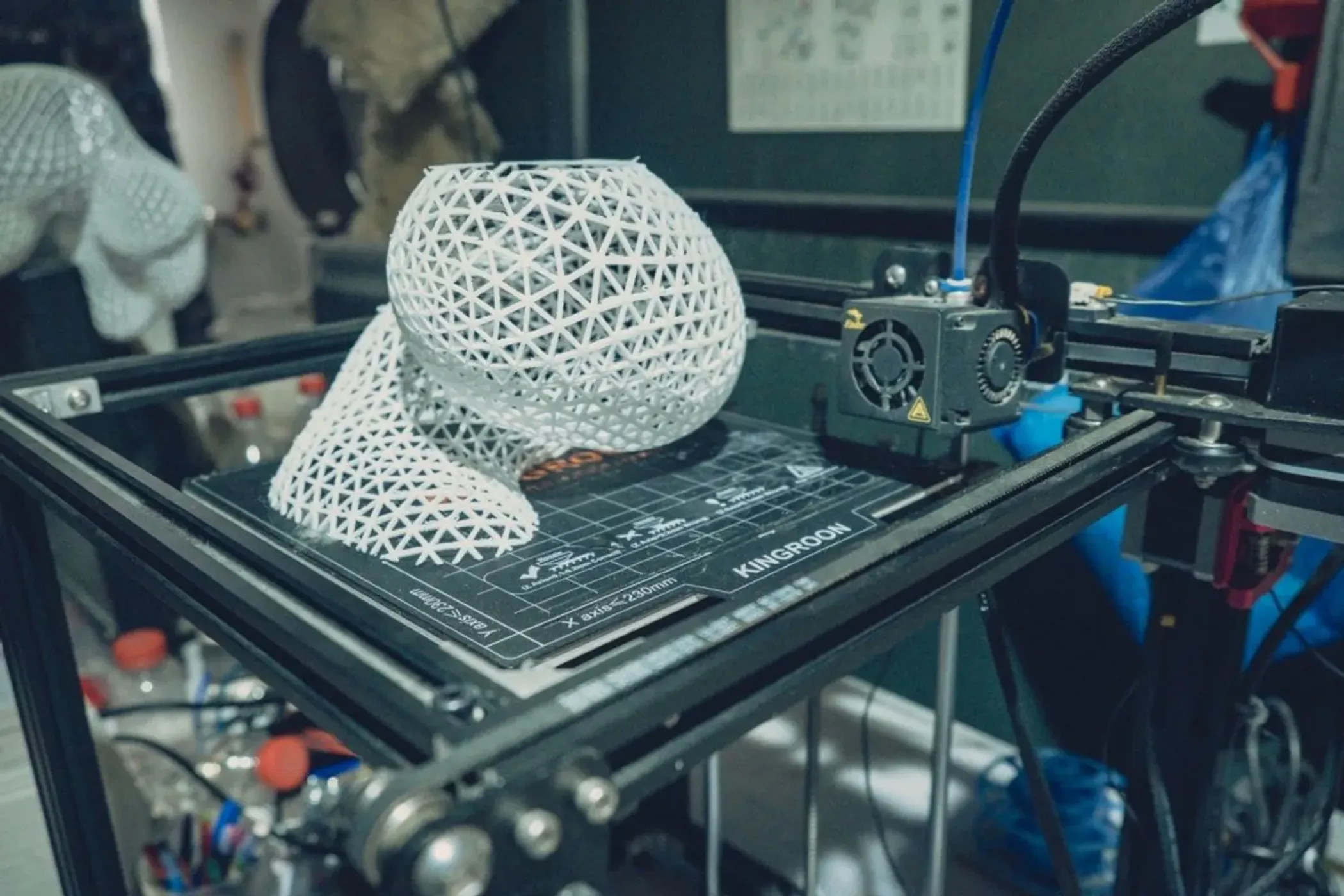
On modern eco-trends, he adds: “Greenwashing is a growing pain. Bag versus bag — pointless debates. But recycling plastic for printing — that’s already useful. Separate bins that later get mixed — it’s still a start. Over time, it’ll make sense.”
“My goal is to materialize a possible object world of the future: someone will see strangeness, and someone — a glimpse of what’s to come in 20–40 years,” says the designer. In his hands, stone, felt, and technology merge into one narrative — respect for material, time, and evolution.
Read the full story on Mustafin Magazine.