


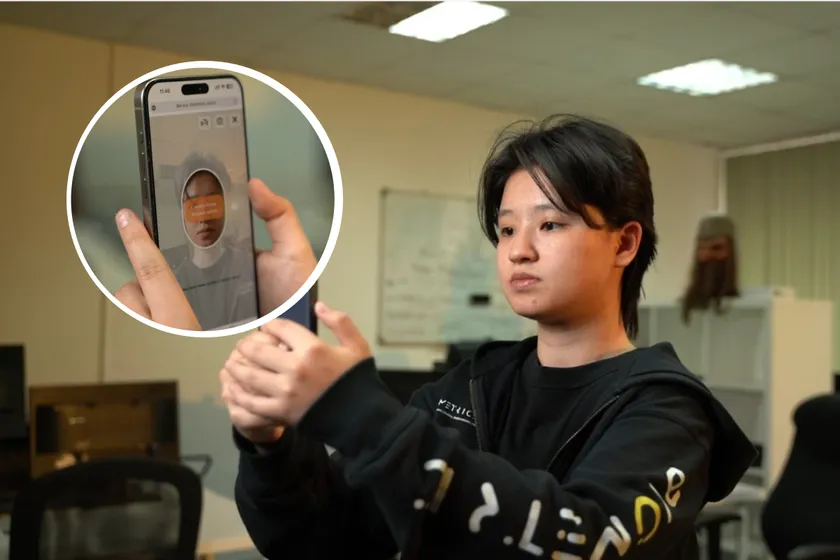
Biometrics is becoming increasingly embedded in Kazakhstan's digital infrastructure. Faces and fingerprints are used for identification in banking applications, online services, and even government platforms. Against the backdrop of AI development and the growth of remote processes, issues of security, privacy, and trust are coming to the fore.
"We are seeing significant growth in remote services. It is precisely in those areas where convenient online solutions are emerging that a new wave of risks is arising," says Alibek Narimbay, founder of the startup Biometric.Vision. He told QazMonitor how biometrics is developing in Kazakhstan today, which technologies really work, and what to do if your phone's camera stops recognizing you.

Kazakhstan's position in the region
Kazakhstan is one of the leaders among Central Asian countries in the implementation of biometrics. Strong players have already emerged in the country, adopting the best practices of international developers. Their solutions have been recognized for several years by international standards such as ISO/IEC (International Organization for Standardization/International Electrotechnical Commission), GDPR (General Data Protection Regulation), and NIST (National Institute of Standards and Technology).
For many customers, the local expertise of the developer is important — they need to understand that the solution is not only technologically advanced but also legally compliant within Kazakhstan. This ensures transparency and gives the customer much more control compared to foreign products, where access to infrastructure and processes is often limited.
The presence of strong local players distinguishes Kazakhstan from some other Central Asian countries, which are largely dependent on foreign developers.
For example, the technologies developed by Alibek Narimbay's startup are already being used by government organizations (the National Pension Fund, the Ministry of Tourism and Sports) and private companies (banks, MFOs, taxi companies, etc.). Outside the country, Kazakhstani technologies are used in Malaysia, the Kyrgyz Republic, Singapore, the UAE, Mexico, Azerbaijan, and Tajikistan.

Why implement biometrics
“The main effect is a reduction in fraud,” says the expert, adding that the use of biometric solutions can reduce fraudulent activity by up to 99%. In addition, in many cases, the number of manual errors is reduced, which saves time and improves the overall quality of checks.
Biometric technologies provide confidence that the person on the other side of the screen is who they claim to be. However, today biometrics may not deliver the expected results if the level of AI development is not taken into account. It is important for companies not only to implement biometric solutions, but also to ensure that they are protected from spoofing, including deepfakes.
Not all biometrics are equally reliable
Identification by fingerprint or iris scan may not yet live up to expectations, as such solutions are expensive and require the purchase of additional equipment, which hinders mass implementation. On the other hand, outdated voice biometrics is now considered the least reliable of all possible options, as the development of AI has made voice spoofing much easier.
“That is why we are seeing high demand for facial biometrics in particular — it is the most affordable and, at the same time, the most reliable option that does not require an additional device. To pass facial identification, the user only needs a smartphone, which is used to carry out the entire process.”
Age, plastic surgery, and injuries: could the system fail?
Well-trained artificial intelligence is responsible for identifying individuals. It analyzes biometric parameters, compares them with reference data, makes decisions about identification or detection of anomalies, and learns from new data, improving accuracy over time. The model helps reduce false positives, adapt to changes in a person's appearance, and ensure resistance to fraud attempts.
However, biometric identification may cease to function correctly in cases where a person's appearance is significantly altered, for example, due to heavy makeup that visually distorts the geometry of the face. A similar situation is possible after plastic surgery: if the changes significantly alter facial features, the person needs to apply for a new passport. After that, the system will be able to identify them based on the updated sample.
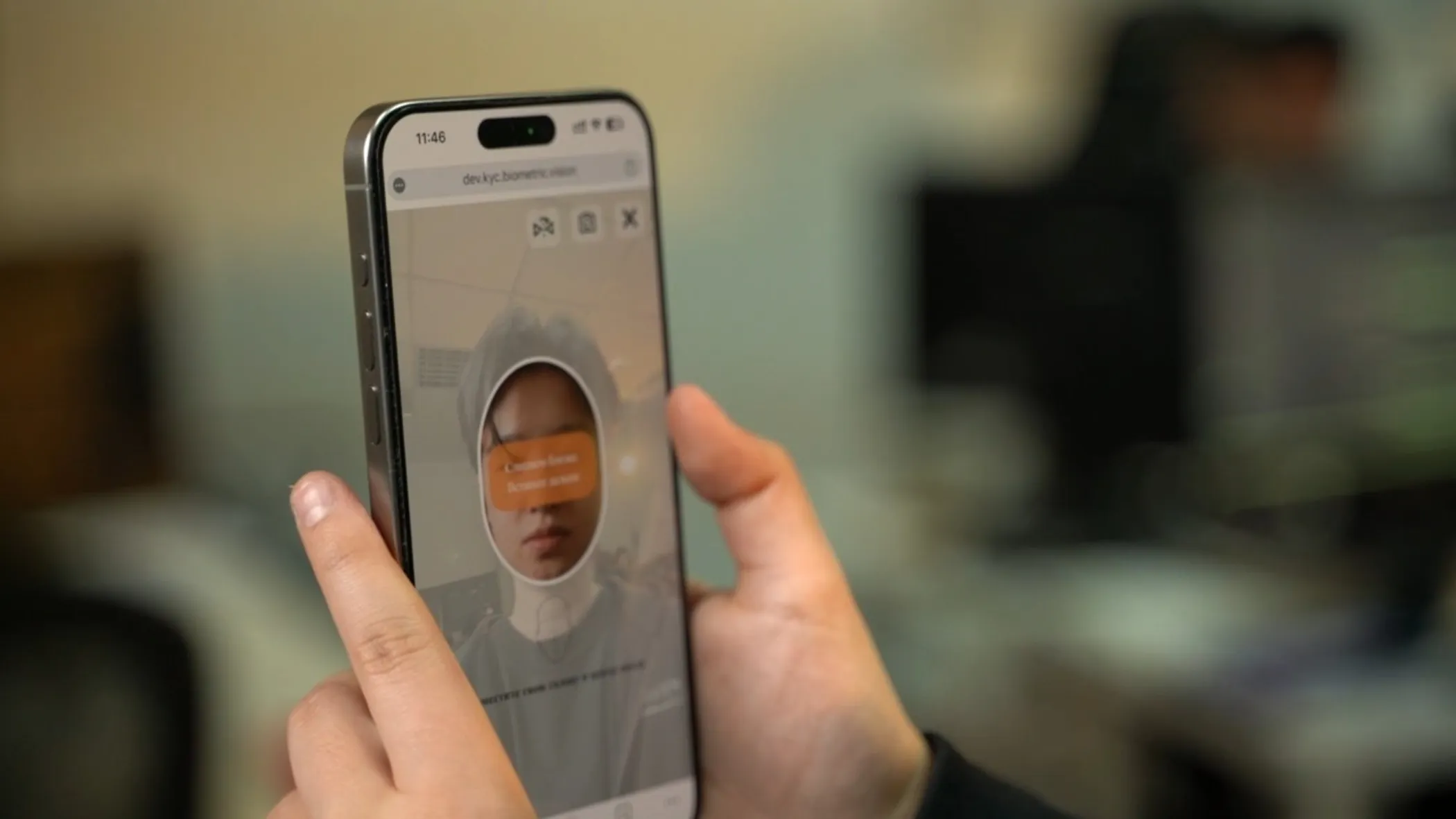
This is not a problem, since significant changes in a person's appearance can make it difficult to identify them even during a manual check. That is why, in such cases, it is also recommended to update identity documents.
Age-related changes do not usually interfere with biometrics: the system is capable of recognizing a person even decades later — on average, within a range of up to 40 years (for example, from the moment of reaching the age of majority to 60 years).
In the case of facial injuries, bandages, or other elements covering the face, the system may refuse to identify the person, as glasses, masks, and other items covering the verification area must be removed for successful verification.
In all cases, the system may request manual scanning by a person from the organization that requested facial recognition. However, the percentage of such cases is extremely low.