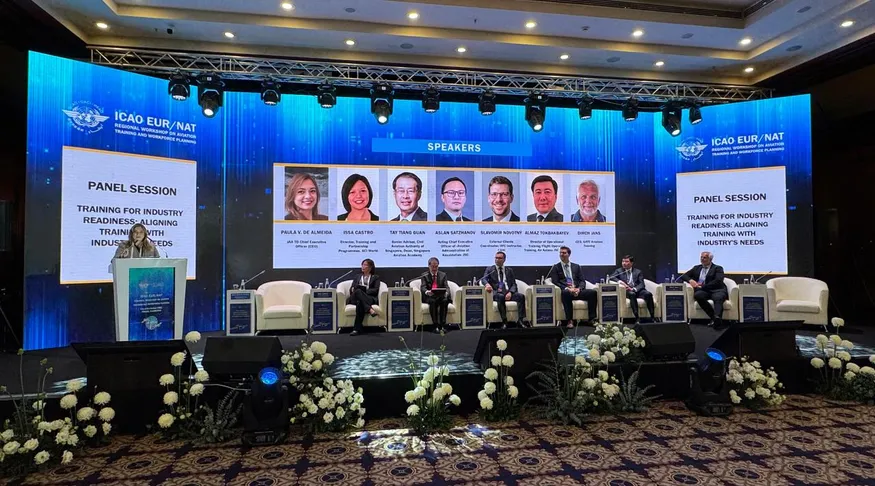
A regional seminar of the International Civil Aviation Organization (ICAO, EUR/NAT) on aviation training and workforce planning was held in Almaty, bringing together representatives of international organizations, government bodies, aviation industry leaders, and training centers from Germany, Denmark, Portugal, South Korea, Turkey, Uzbekistan, and other countries.
Opening the seminar, ICAO EUR/NAT Regional Director Nicolas Rallo noted that one of the main goals of the event was to strengthen professional connections between industry leaders, educators, and future specialists.
“Through discussions with governments, civil aviation authorities, the industry, and academia, including here in Central Asia, I have heard compelling insights. These conversations reinforced my belief that we must address aviation workforce challenges collectively — through cooperation and shared commitment,” he said.
In his welcoming remarks, Kazakhstan’s Vice Minister of Transport Talgat Lastayev emphasized that developing aviation education and preparing qualified personnel are key conditions for the sector’s sustainable growth.
“It is especially important today to ensure a close connection between educational programs and labor market needs so that the new generation of specialists is ready to meet the challenges of modern aviation and introduce innovative solutions to flight safety and efficiency.”
Chair of the Civil Aviation Committee Saltanat Tompiyeva reported that in the first nine months of this year, passenger traffic increased by 7.2%, and the aircraft fleet has grown by nearly 15% over the past three years. By 2030, the fleet is expected to expand by another 45%.
“As the industry continues to grow rapidly, the demand for skilled personnel is increasing, and in this regard, we attach great importance to ICAO initiatives, including NGAP. Particular attention is given to career guidance and promoting aviation professions among young people,” emphasized S. Tompiyeva.
Over the two-day event, participants discussed best practices in collecting and sharing data on aviation workforce needs, as well as successful initiatives to attract and retain new generations of aviation professionals. The sessions also focused on forecasting industry demands, bridging the gap between education and practice, promoting gender equality, and strengthening partnerships across the aviation ecosystem.
The seminar outcomes will contribute to the development of regional and national strategies aligned with ICAO’s global initiative Next Generation of Aviation Professionals (NGAP).
Source: Ministry of Transport