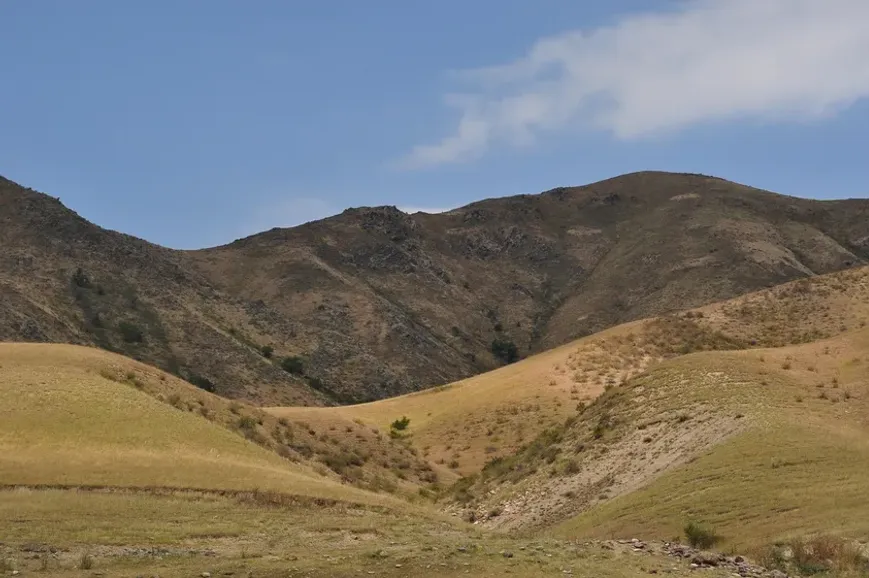
The government of Kazakhstan is moving to a new stage of geological exploration of mineral resources using more detailed modern geological survey methods, QazMonitor reports, citing the press service of the Prime Minister.
In 2025, 20 geological survey projects with a scale of 1:50,000 were developed, covering a total area of 100,000 km². In the future, it is planned to cover 30,000 km² of the most promising areas annually. For comparison, the previously used geological mapping scale was 1:200,000.
Over the next three years, 240 billion tenge, or about $500 million, is planned to be allocated for the implementation of these 20 projects, seismic exploration in poorly studied sedimentary basins, and the creation of a modern geological infrastructure. For comparison, over the past 15 years, $469 million has been invested for these purposes.
The projects include analysis of remote sensing data, aerogeophysical and geochemical studies, and a range of field work. When compiling the list of sites, the degree of depletion of reserves, the absence or minimal number of subsoil users, and the prospects for priority types of minerals were taken into account. As a result, areas with high potential for the discovery of deposits of copper, gold, lead, zinc, rare earth elements, barite, and bauxite have been identified.
In addition, seismic exploration is planned in little-studied oil and gas prospective basins: North-Torgay, Shu-Sarysu, and Syrdarya. There are also plans to modernize the laboratory and analytical base and digitize geological data.
The transition to geological exploration on such a scale will improve the accuracy of geological forecasts and is in line with international practice in the European Union, Canada, Australia, and China. Detailed regional mapping is seen as the basis for reducing geological and investment risks and attracting private investment in geological exploration and mineral extraction.