


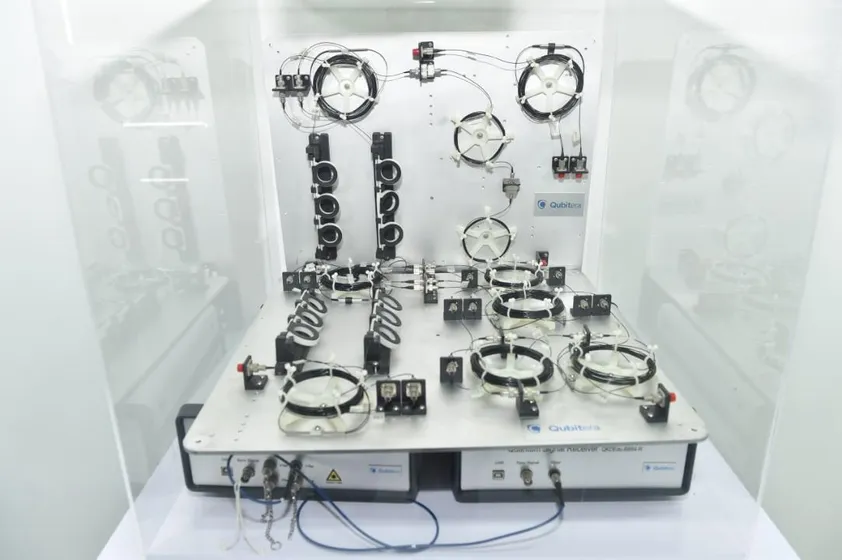
The Kazakhstan–Singapore Center for Quantum Technologies was officially opened at the Farabi Hub for Innovative Products and High-Tech Projects at Al-Farabi Kazakh National University (KazNU), QazMonitor reports.
According to the Ministry of Science and Higher Education of Kazakhstan, the center will conduct fundamental and applied research, train a new generation of specialists—including researchers, engineers, and technology entrepreneurs—develop quantum-secured communications and computing solutions, facilitate international knowledge transfer, and create joint R&D projects and startups.
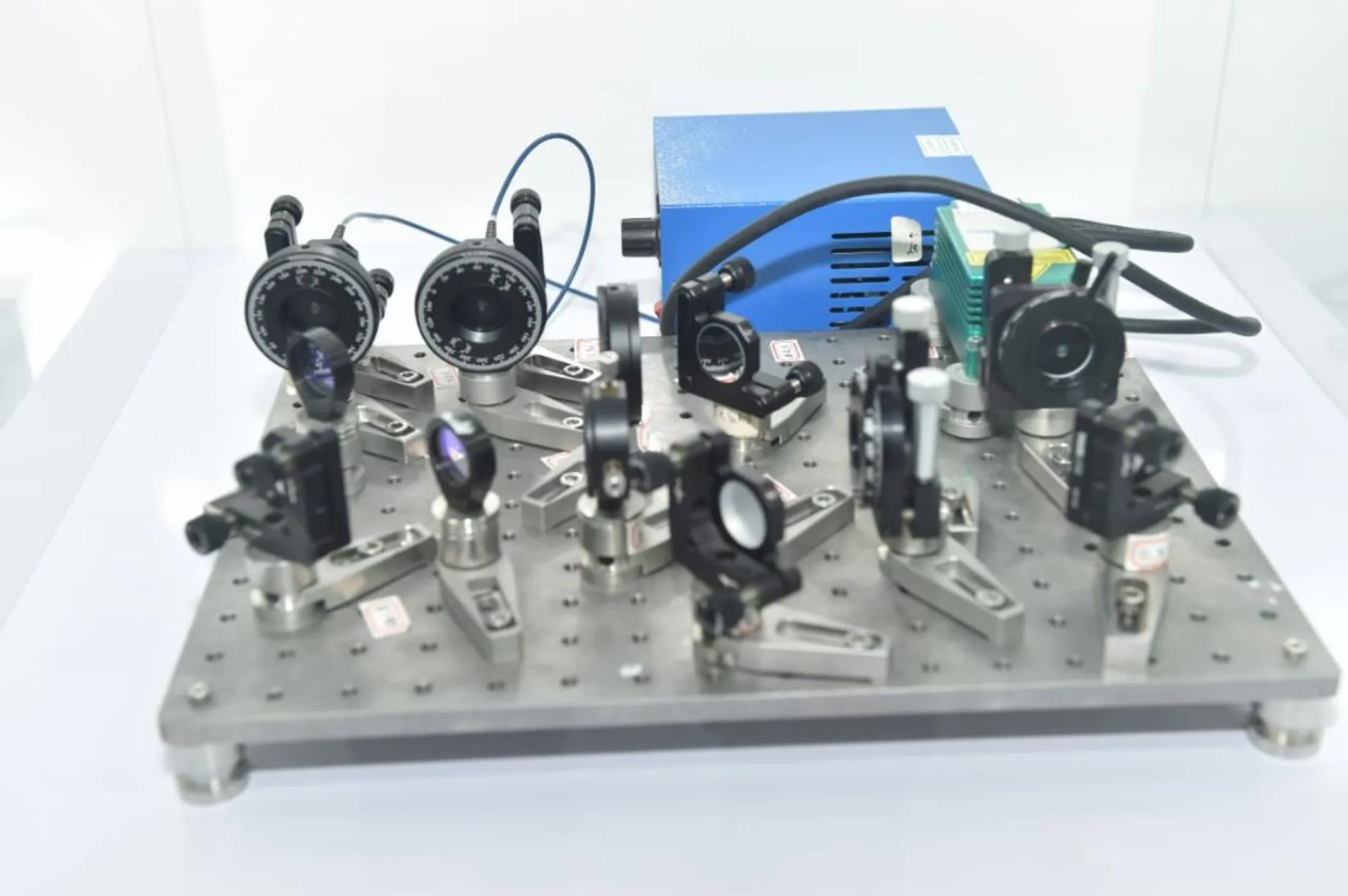
In the first phase, a laboratory for quantum cryptography and quantum communications equipped with modern photonic systems and educational-experimental infrastructure was launched. This will support both scientific research and practical training for specialists.
Quantum technologies enable drastically faster information processing compared with classical tools. Quantum computers use qubits, or quantum bits, which can represent 0 and 1 simultaneously. This allows complex tasks, such as molecular modeling, to be solved exponentially faster than on conventional computers.

Quantum communications rely on data transmission via photons. Physical laws make it impossible to measure the state of a quantum system without altering it, making such communication channels impossible to intercept undetected. Quantum sensors and metrology use the high sensitivity of quantum systems to external influences for ultra-precise measurements.
The development of quantum technologies allows for the modeling of new materials and drugs, as well as fundamentally changing methods of information transmission and processing.