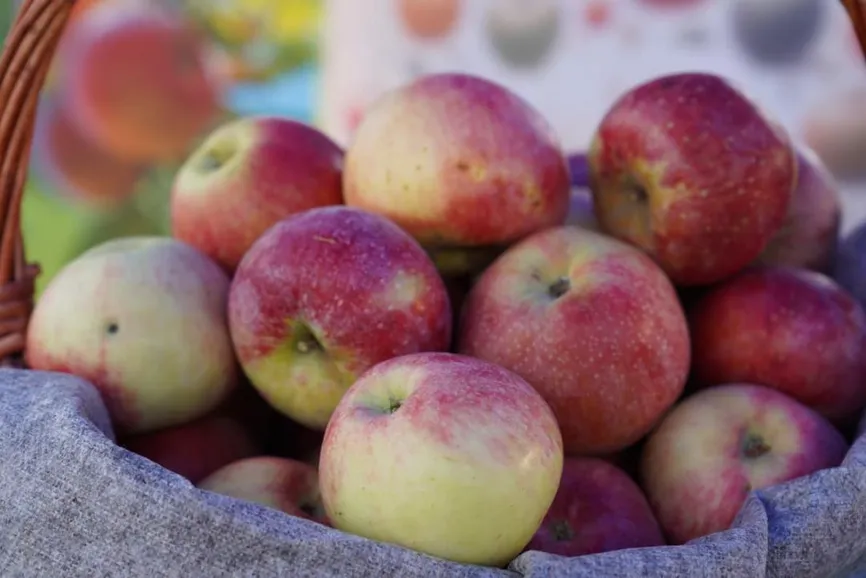
Kazakhstan is advancing a large-scale project to revive the legendary Almaty Aport apple, a symbol of the nation’s horticulture. The initiative is being implemented by the Ministry of Agriculture of Kazakhstan together with the State Fund “Astana-20” and NANOС, following the President’s directive, with total investments amounting to KZT 163 million.
The first 10-hectare orchard has been established at the “Talgar” regional branch of the Kazakh Research Institute of Horticulture and Vegetable Growing. Aport saplings were propagated by grafting onto seedlings of wild Malus sieversii collected from genetic reserves in the Dzungarian Alatau. Earlier, 11 promising wild apple forms were selected, and in 2024–2025 expeditions were conducted to gather seeds.
Over the next three years, 110 hectares of Aport orchards are planned on the lands of the Talgar branch, Bayserke-Agro company, and KazNAU, with support from the Almaty city administration. The first harvest is expected in 7–8 years.
As part of the project, infrastructure has been upgraded: irrigation systems modernized, a water storage reservoir built, mother-stock orchards fenced, and agricultural machinery acquired. Scientists are creating a virus-free pre-basic gene bank of apple varieties and rootstocks, forming the foundation of a modern virus-free nursery system.
Over two years, five valuable varieties and five rootstocks have been cleansed of viruses, genotyped according to international EPPO and UPOV standards, and genetic passports and morphological descriptions produced. The molecular research laboratory has laid the groundwork for Kazakhstan’s transition to modern virus-free horticulture.
Source: Ministry of Agriculture